A diameter printed on a quotation is not enough to order the right pipe: you also need the internal measurement, class, effective length, joint arrangement, load conditions and delivery scope. By the end, you will be able to define the pipe, calculate the quantity, compare quotations and prepare a Nagpur delivery that avoids site delays and disputed damage.
Key takeaways
- State pipe type, internal diameter, length, class, joints and quantity.
- Calculate quantity from route length, pipe length and joint allowance.
- Use 600 mm pipes only after checking drainage flow and utility clearances.
- Confirm access, unloading equipment, delivery point and documents before dispatch.
What details must appear in a cement pipe order?
“Cement pipe” is not a complete purchase specification. Identify it as a precast concrete or RCC pipe, then define these fields:
1. State the nominal internal diameter, outside diameter, wall thickness, pipe class, effective length per piece and unit weight. If you request a 600 mm pipe, confirm that 600 mm means nominal internal diameter; outside diameter, wall thickness and weight vary by class and design.
2. Specify the class under IS 458: NP1, NP2, NP3 or NP4. These classes indicate structural or load capacity, not diameter. A larger pipe is not automatically stronger.
3. Name the intended service: non-pressure drainage, sewerage, culvert work or irrigation. A reinforced gravity-drainage pipe is not automatically suitable as a pressure pipe.
4. Describe the joint system, such as collar or socket-and-spigot, and provide socket or collar dimensions. State whether a rubber ring is required, including its size and material, and confirm compatibility with adjoining pipes, bends, chambers and fittings.
5. State the reinforcement requirement, applicable standard and acceptance evidence, such as the specified three-edge-bearing test.
These cement pipe details in Nagpur belong in the quotation, not in an assumption based on a product name or photograph. Require the supplier’s drawing to show every dimension and the effective laying length; a catalogue length can differ after socket engagement or collar jointing.
How do length, diameter and joints determine the quantity?
Cement pipe length and diameter are separate order fields. A listed 2.5-metre length describes one piece, not necessarily the usable laying length: socket, collar or joint engagement can reduce the distance covered. Confirm the effective length on the supplier’s drawing.
1. Measure the route’s net installed length from the drawings and subtract chambers, manholes and end treatments where no pipe will be laid.
2. Divide that length by the effective length per piece and round up. Do not divide by the catalogue length if joint engagement shortens it.
3. Add pieces for cut sections, alignment changes and rejected units. Set a controlled wastage allowance from the site plan rather than adding an arbitrary percentage.
4. Mark every chamber, crossing, outlet and terminal connection on the alignment. Multiplying trench length by a catalogue count can understate the order.
Diameter affects excavation width, bedding space, lifting equipment, truck loading and access for jointing. Length affects joint count, installation labour and delivery sequence. A 2.5-metre piece reduces joints compared with shorter units, but it needs more room for unloading and positioning.
The order must state the nominal internal diameter, actual effective length per piece and joint arrangement. Confirm whether the joint is socket-and-spigot, collar or another specified system, and whether rubber-ring sealing is included. A pipe that matches the diameter may still be incompatible with the joint system.
When is a 600 mm pipe suitable for drainage or utilities?
A 600 mm pipe suits gravity drainage, stormwater crossings, culverts or service corridors when the calculated flow, structural design and service specification support it. For a cement pipe 600 mm in Nagpur, treat 600 mm as the nominal internal diameter, not a complete design.
| Option | Selection checks | When it applies |
|---|---|---|
| 450 mm | Lower excavation and handling demand; verify cleaning access and flow | Smaller design flow and fewer debris concerns |
| 600 mm | Moderate capacity, cover and crossing requirements; check local availability | Balanced drainage, culvert or utility-corridor layouts |
| 750 mm | Larger excavation, lifting and cover requirements; not an automatic solution | Higher flow or maintenance access where the design requires it |
Separate hydraulic sizing from structural sizing. Use design flow, slope and invert levels in Manning’s equation, Q = (1/n)AR²ᐟ³S¹ᐟ², then check freeboard at the design condition. Reduce usable capacity for silt and debris; do not treat the full geometric section as permanently available.
Request the outside diameter, wall thickness and unit weight for trench width, lifting and transport design. Class, bedding, cover depth, soil, groundwater, trench or embankment conditions and traffic surcharge determine strength. Confirm the engineer’s specified NP2, NP3 or NP4 class and three-edge-bearing compliance before ordering.
What should a Nagpur delivery plan cover before the truck leaves?
Before the truck leaves, make the dispatch instruction specific enough for a driver and unloading crew to follow without calling for directions.
1. Write the exact site address, site contact and phone number, delivery window, approach-road restrictions, truck-size limits, available turning space, unloading equipment and trench-side stockpile location. State whether the vehicle and crane can reach that stockpile.
2. Separate transport, unloading, stacking and placement beside the trench in the quotation. Delivery to the locality does not include safe unloading at the work front.
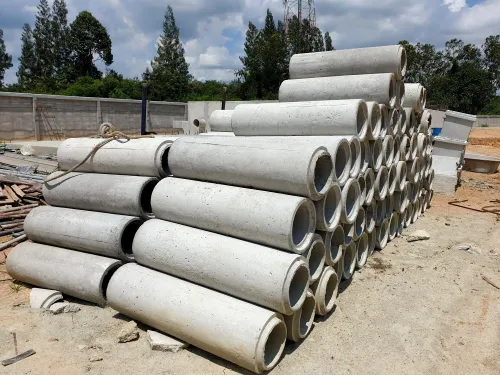
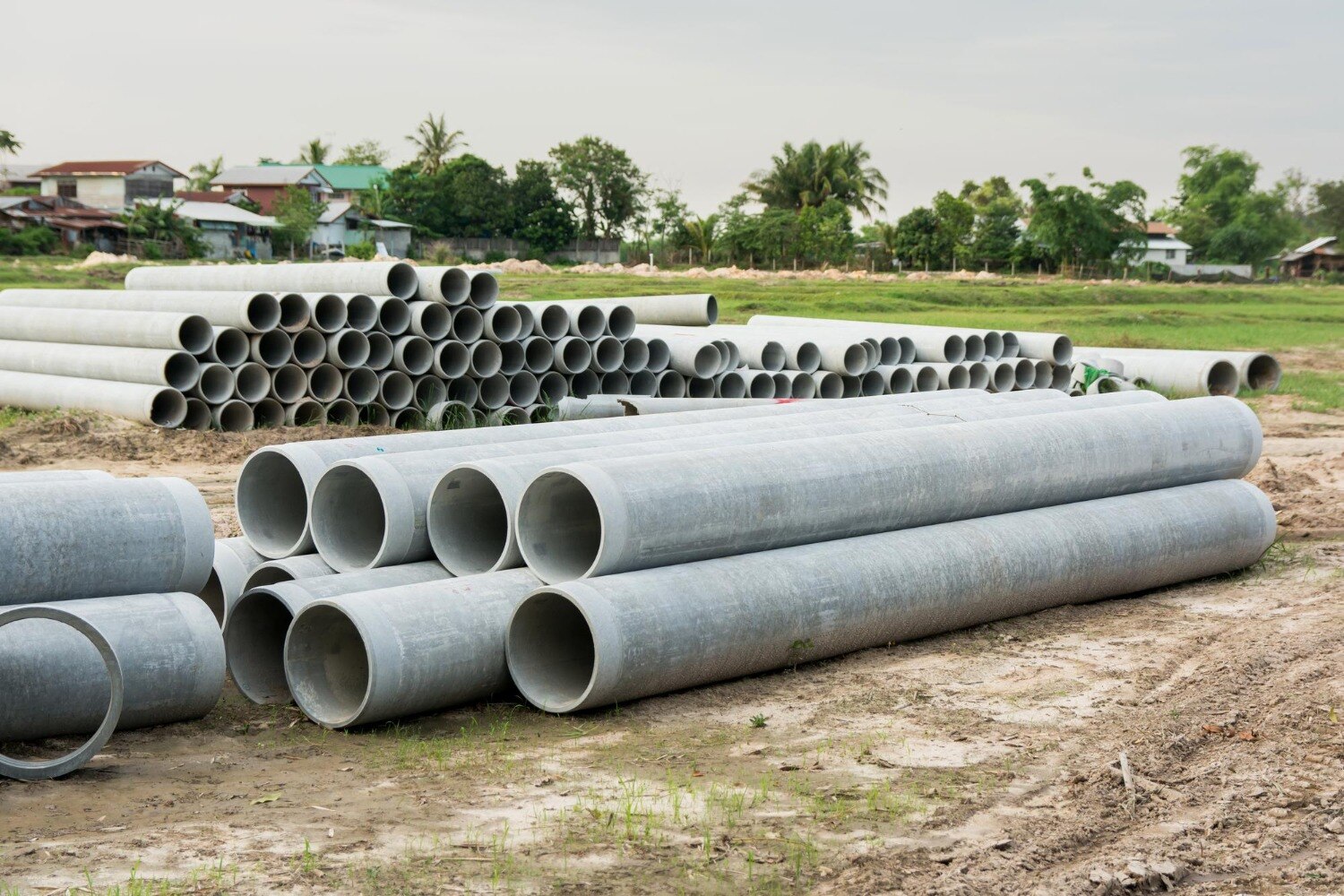
3. Plan for access, not just arrival. Long, heavy 600 mm RCC pipes can reach a site while the vehicle or crane cannot reach the intended stockpile.
4. Prepare firm, level supports and chocks before arrival. Prohibit rolling, dropping and uncontrolled slinging, which can damage pipe ends, sockets and reinforcement.
5. At receipt, count every piece against the delivery note before the vehicle leaves. Inspect each pipe for cracks, broken ends, exposed reinforcement, socket or spigot damage and deformation.
6. Photograph every defect, record the affected piece numbers and notify the supplier immediately. Damage found after stacking is harder to attribute to transport.
For cement pipe delivery in nagpur, ask Vishal Cement Product to state these inclusions, access requirements and site conditions clearly in its quotation, so you compare an actual delivered scope rather than a bare factory price.
Related products
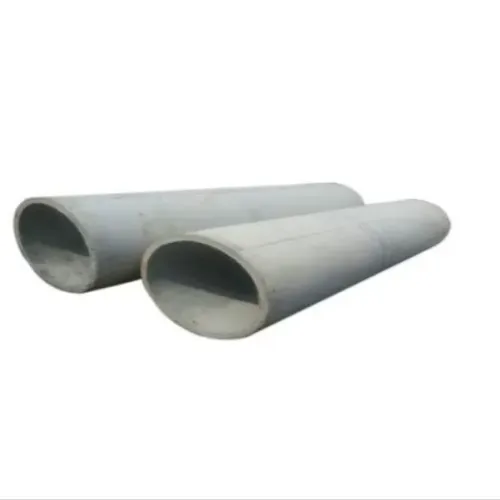
 | Cement Pipe Material Cement Shape Round Diameter 600 mm Length 2.5 meters We are a most trusted name among the topmost companies in this business, involved in... View product → |
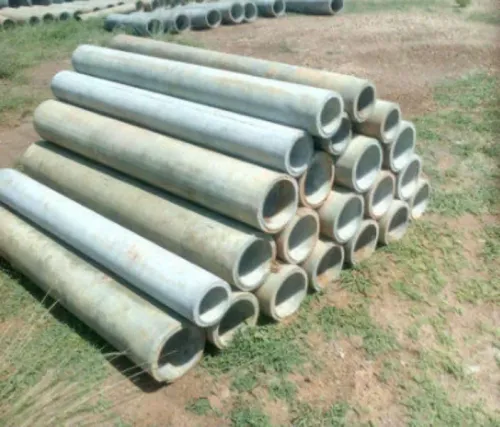
 | Cement Spun Pipe Material Cement Usage/Application Drainage Diameter 150 mm Length 2.5 meter Shape Round We are a highly acknowledged organization, engaged in... View product → |
How can you compare quotations and approve the right pipe?
Compare quotations on an identical delivered scope, not on the lowest per-piece rate. Copy this template for every supplier:
Field | Supplier A | Supplier B | Supplier C Nominal internal diameter | | | Outside diameter and wall thickness | | | Class and effective length | | | Weight and reinforcement | | | Joint and gasket scope | | | Applicable standard and intended use | | | Quantity and unit rate | | | Loading and freight to Nagpur site | | | Unloading, taxes and lead time | | | Replacement procedure | | |
Request the product drawing, class declaration and three-edge-bearing test compliance. Reject vague evidence such as “heavy duty,” generic quality claims, visual inspection alone or nominal wall thickness alone; none proves the specified pipe’s load capacity.
Ask each supplier to state how it handles shortages, cracks discovered at receipt and pieces damaged during stacking. Record who pays for collection, replacement, reinspection and site handling, and set the notification period in the purchase order.
Have the engineer confirm that bedding and backfill suit the installed cover, traffic loading, soil and groundwater conditions. Pipe class cannot be selected independently of the laying design.
Before issuing the order, reconcile flow, slope, invert and freeboard with the structural design and delivery schedule. The signed order must fix the diameter, effective length, joint system, acceptance evidence, quantity and every delivery inclusion.
Frequently asked questions
What details must appear in a cement pipe order?
Specify precast concrete or RCC pipe, internal diameter, length, wall thickness or class, joint type, quantity, delivery location and required documents.
How do length, diameter and joints determine the quantity?
Divide the installed route length by the pipe length, then add allowance for joints, cuts and damaged units. Use the specified diameter to confirm capacity and compatibility.
When is a 600 mm pipe suitable for drainage or utilities?
A 600 mm pipe suits a project only when its hydraulic capacity, cover depth, traffic loading, bedding, gradient and connection details meet the design.
What should a Nagpur delivery plan cover before the truck leaves?
Confirm the site address, access route, unloading space, lifting equipment, delivery slot, contact person, quantity, pipe condition and required delivery documents.
How can you compare quotations and approve the right pipe?
Compare like-for-like diameter, length, class, wall thickness, joint system, testing documents, freight, unloading terms, taxes, lead time and replacement conditions.
Related products
 | Concrete Pipe Pipe Type rcc pipe Diameter 600 mm Material RCC Length 2.5 meter Banking on the skills of our qualified team of professionals, we are involved in... View product → |
 | Concrete Spun Pipe Material Concrete Usage/Application Drainage Diameter 1200 MM Length 8 feet Shape Round We have been counted amongst the most trusted names in this... View product → |
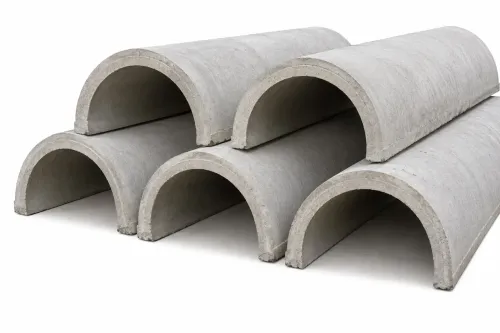
 | RCC Half Round Pipe Unit Pipe Length 3 meter Thickness 25-40 mm Material RCC Shape Half Round We have carved a niche amongst the most dominant names in this domain,... View product → |
 | RCC Hume Pipe Size 300 mm Class NP2 Pipe Type RCC Material RCC Shape Round Diameter 300 mm Thickness 30 mm Leveraging the skills of our qualified team of... View product → |
Keywords