A roadside drain beside a Nagpur farm road must handle monsoon runoff, shifting black cotton soil and occasional tractor access without washing out the road edge. You will be able to decide whether an RCC half-round channel fits your site, specify its hydraulic and foundation requirements, compare its installed cost with alternatives, and avoid treating a thin exposed section as a vehicle crossing.
Key takeaways
- Use a half-round channel where visible, shallow roadside drainage suits low-speed farm traffic.
- Size the channel from catchment runoff and slope, not catalogue dimensions alone.
- Prepare a compacted, well-drained bed to limit movement in Nagpur’s expansive soil.
- Protect outlets, road edges and vehicle crossings with aprons, headwalls or covers.
When an RCC Half-Round Channel Makes Sense Beside a Farm Road
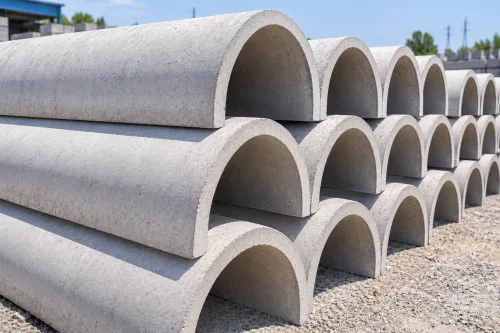
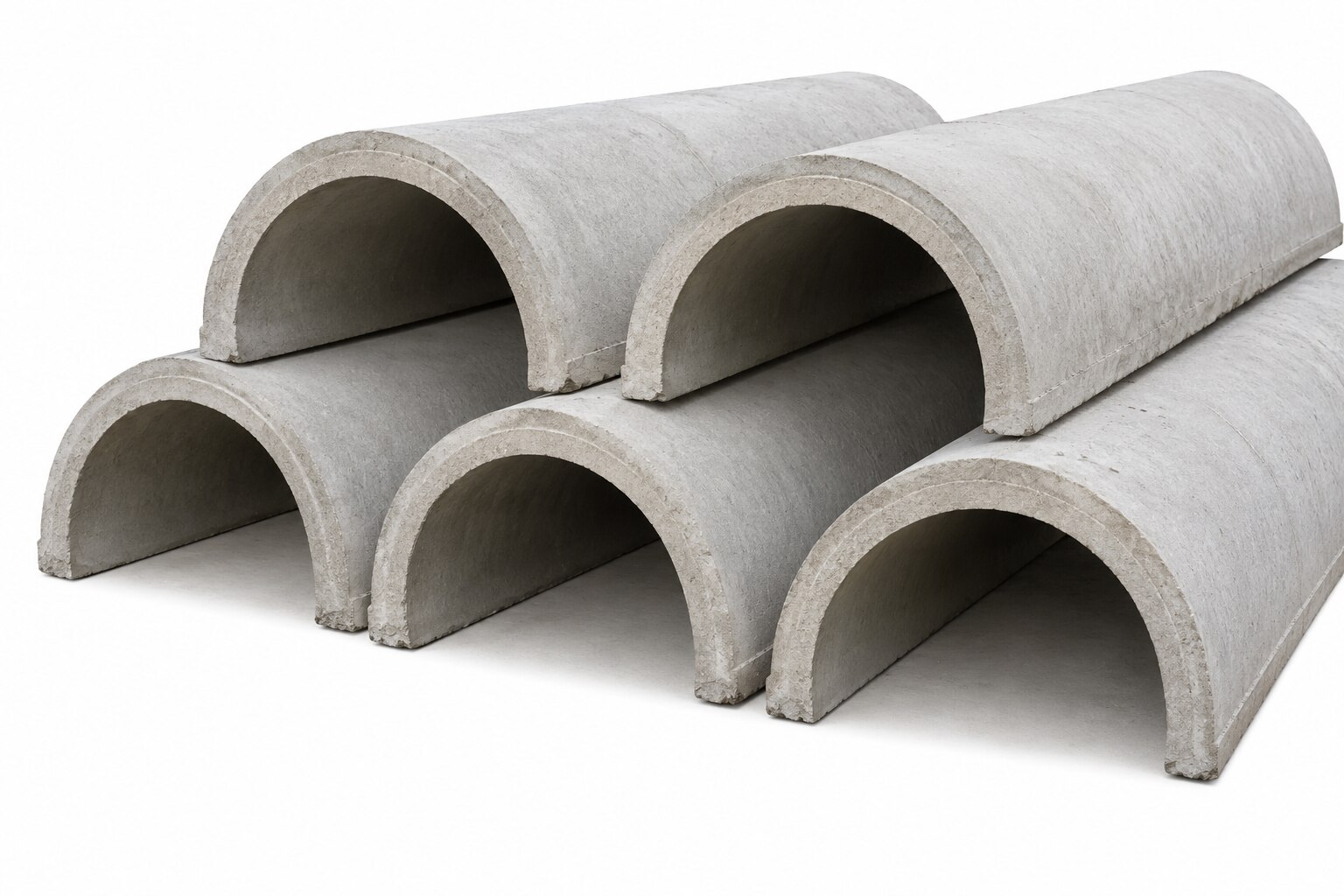
An RCC half round pipe for farm roads in Nagpur is suitable when it serves as a shallow, visible roadside channel beside a low-speed farm track. It handles monsoon runoff well only when water has a defined fall to a stable outfall, apron, natural drain, or protected watercourse.
Without that outlet, runoff will cut the embankment and undermine the road edge.
- Choose it where you can inspect and desilt the channel from the roadside, and where the shoulder provides enough width for safe separation from traffic.
- Use a trimmed, compacted bed or designed concrete bedding on black cotton soil; placing sections directly on untreated expansive soil invites settlement, open joints, and longitudinal cracking.
- Reconsider it beside a narrow shoulder, a busy pedestrian route, or a road with several farm entrances, because the open channel creates a fall hazard and consumes usable edge space.
The channel is not a substitute for a buried cross-drain under a tractor lane. Tractors, trailers, cattle, and two-wheelers must not cross the exposed section; each entrance needs a separately designed cover slab or crossing structure that transfers wheel loads without crushing the units.
An open half-round section makes blockage and sediment visible, but it leaves the outlet and road edge exposed to erosion. Choose a covered drain, buried pipe, or cast-in-place drain instead when uninterrupted vehicle access, pedestrian safety, or limited land width matters more than easy inspection.
Size the Channel from Runoff, Not from the Product Catalogue
A catalogue diameter cannot tell you whether a channel will carry monsoon runoff. For rcc half round pipe farm drainage in nagpur, calculate the flow from the contributing area, not from the section you happen to find in stock.
1. Delineate the catchment draining toward the road: field, roof, shoulder and adjoining track. Estimate peak discharge with Q = C i A, using runoff coefficient C for each surface, design rainfall intensity i for the chosen storm duration, and area A in hectares or square metres. Combine flows that reach the same outlet.
2. Survey the available fall with a level or laser. Use Manning’s equation, Q = (1/n) A R²⁄³ S¹⁄², where A is the wetted area, R is wetted area divided by wetted perimeter, S is channel slope and n reflects the concrete surface.
Calculate the half-round section at its actual water depth; do not treat its nominal diameter as a closed-pipe diameter.
3. Choose width and depth together, then check velocity. A very shallow section clogs with silt; a steep section can scour joints and the outlet. Leave freeboard above the design water level—use a defined margin such as 100 to 150 mm where the site allows, and increase it for uncertain inflow or debris.
4. Specify the outlet before ordering. Discharge into a stable apron, natural drain or protected watercourse, with erosion protection and no bare embankment drop. A channel that has capacity but no positive, protected outfall will still wash out the road edge.
Build a Stable Bed on Nagpur’s Expansive Soil
Direct placement on black cotton soil is a false economy. Seasonal swelling and shrinkage create voids beneath the invert, then differential settlement opens joints or produces longitudinal cracks.
- Excavate through topsoil, roots and soft pockets until you reach firm, reasonably uniform ground. Keep the trench narrow enough to support the road edge, but wide enough for compaction beside both channel edges.
- Trim the formation to the designed fall, lightly moisten dry soil, and compact it in thin layers. Do not place concrete over standing water or a churned, saturated base; remove and replace those areas with well-graded granular material.
- Support the invert continuously on a designed lean-concrete or compacted granular bed. Use local concrete bedding where the subgrade varies, the slope is steep, or concentrated runoff could travel beneath the unit.
- Set each section from a stringline or laser, checking both invert level and edge line. Bring adjoining ends together without forcing a unit into alignment; a small step at a joint becomes a blockage and a scour point.
- Seal joints with the specified cementitious or flexible joint material, and keep the seal continuous across the channel width. On long or sloping runs, retain the units with planned construction joints rather than allowing random cracking.
- Restrain both outside edges with concrete haunches, an edge beam, or a compacted shoulder that cannot wash away. Add transverse checks or anchors where slope and flow could slide the sections downhill.
Backfill both sides evenly and compact by hand or light equipment; never push fill against one edge only. Keep water out of the bedding during construction, because seepage beneath a half-round channel can displace an otherwise sound installation.
Protect the Road Edge, Outlet and Every Vehicle Crossing
Keep the channel open for inspection, but keep traffic off it unless each crossing has been designed for the expected wheel load. A half round pipe for roadside drainage in Nagpur is easy to desilt, yet its exposed edges become a fall hazard for cattle, pedestrians and two-wheelers beside a narrow shoulder.
Control blockage with a visible inlet, a trash-catching point upstream and scheduled removal of silt before the monsoon. Do not allow grass, soil or driveway fill to cover the invert. Provide firm edge restraint so passing wheels cannot break the rim or push soil into the channel.
Protect every discharge point. The outlet should end on a concrete or stone apron that spreads flow into a stable natural drain or watercourse; releasing water onto bare black cotton soil will cut a gully, remove the road shoulder and undermine the last unit.
Use this crossing checklist:
- Provide a designed cover slab or crossing structure with bearing support on both sides, not a loose steel plate or thin improvised slab.
- Match the structure to tractor and trailer axle loads, including loaded turning movements.
- Form level approach transitions so wheels do not strike the cover edge.
- Extend protection beyond the outlet and crossing where fast flow can scour the bed.
- Fence, cover or reroute the drain where people or animals cross frequently.
If crossings are numerous, the open channel loses its advantage. A covered drain or buried pipe may cost more initially but reduce falls, debris entry and repeated damage.
Compare the Installed Cost with a Covered or Cast-In-Place Drain
Compare the installed total, not the factory rate per metre. The useful measure behind rcc half round channel cost in nagpur includes transport and handling, which can dominate when a farm lies outside the city or the approach road cannot take a heavy vehicle.
| Option | Installed scope | When it is worth choosing |
|---|---|---|
| RCC half-round channel | Shallow excavation, bedding, visible joints and outlet protection; add designed crossing slabs | Low-speed farm track, accessible roadside, easy inspection and desilting |
| Cast-in-place V-drain or U-drain | Formwork, reinforcement if specified, concrete placement, curing and surface finishing | Narrow or irregular alignment, frequent crossings, continuous edge restraint or a flush covered finish |
| Buried RCC or HDPE pipe with inlets | Trench, bedding, pipe joints, inlet chambers, backfill and compaction | Narrow shoulders, pedestrians, animals, vehicle access or an uninterrupted road edge |
Require every quotation to identify the same hydraulic duty and show these separate amounts:
- Unit rate, quantity, loading, transport, unloading and wastage
- Excavation, disposal, bedding or foundation concrete, line and level
- Joint treatment, edge restraint, backfilling and labour
- Outlet apron, erosion protection, inlet chamber and each tractor crossing
- GST, access restrictions and any cover slab or grate
Ask Vishal Cement Product to price the units and site work as separate lines, then compare that schedule with a cast-in-place drain and a buried pipe. Choose the open channel when shallow installation and inspection outweigh its fall hazard; choose the covered or buried option when crossings, narrow shoulders or uninterrupted access control the risk.
Related product
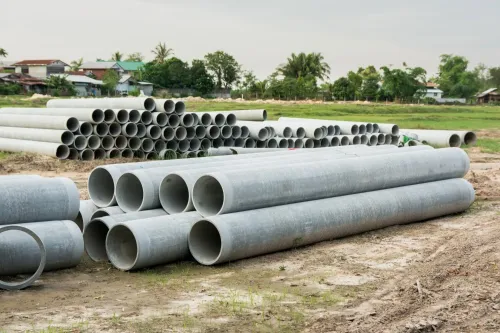
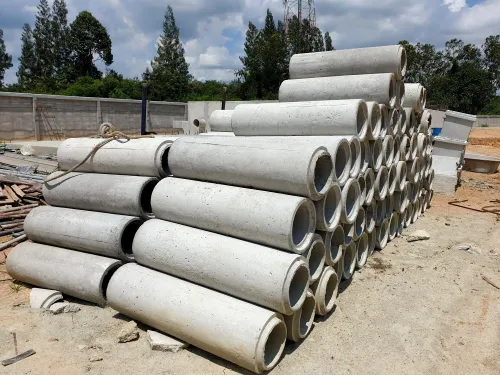
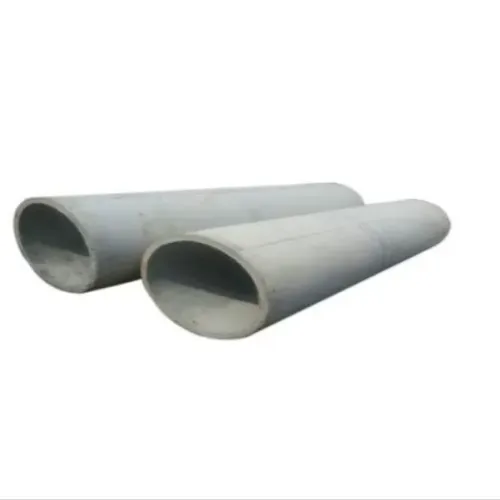
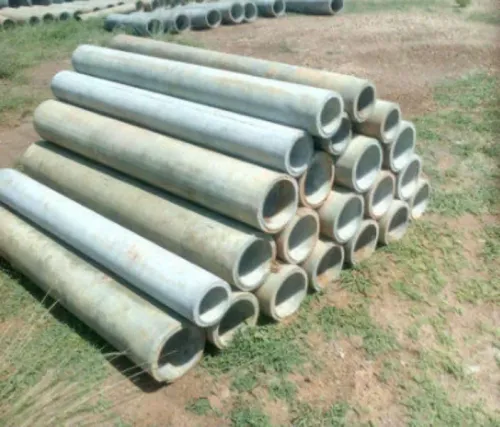
 | RCC Half Round Pipe Unit Pipe Length 3 meter Thickness 25-40 mm Material RCC Shape Half Round We have carved a niche amongst the most dominant names in this domain,... View product → |
Frequently asked questions
When does an RCC half-round channel make sense beside a Nagpur farm road?
Use it for a shallow, visible roadside channel where runoff has a defined fall to an apron, natural drain or protected watercourse.
How should you size a half-round pipe for roadside drainage in Nagpur?
Estimate the contributing catchment, design rainfall runoff and available slope, then check that the channel carries peak flow without overtopping.
How do you build the channel on Nagpur’s expansive soil?
Excavate soft material, install a level compacted granular or concrete bed, control the slope and prevent water from saturating the surrounding soil.
How should you protect vehicle crossings and the channel outlet?
Use a designed cover or slab at crossings, reinforce the road edge and provide an apron, headwall or other erosion-resistant outlet treatment.
How does RCC half-round channel cost compare with other farm-road drains?
Compare the complete installed cost, including excavation, bedding, joints, crossings, outlet protection and maintenance, with covered or cast-in-place alternatives.
Keywords